
Career Change CV Template
A skills-first layout that leads with what transfers, not with job titles that don't match your new target role.
What makes a great career change CV
- Opens with a summary that names the transition directly
- Reorders sections to put transferable skills before job titles that don't match
- Translates old-industry language into the new field's terminology
- Uses achievements, not job titles, as the main selling point
ATS Structured template preview
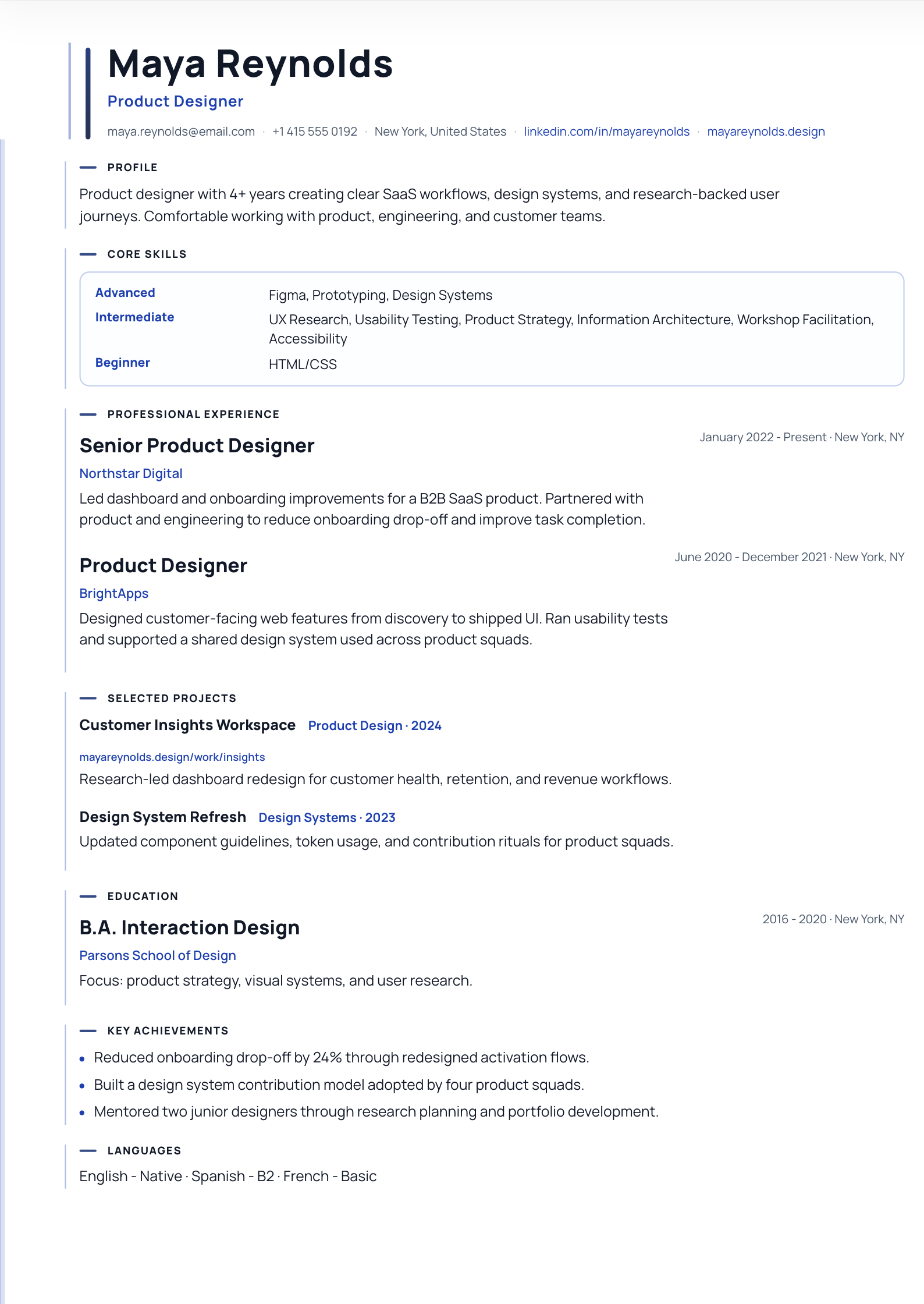
Example CV bullet points
- Led a cross-functional project as a volunteer coordinator, a skill directly transferable to project management.
- Managed a $50K annual budget in a prior operations role, a foundation for a move into finance.
- Trained and onboarded 8 team members, demonstrating leadership skills applicable to a people-management track.
- Analyzed customer data in a retail role, building the analytical foundation for a shift into data analytics.
Frequently asked questions
How do I explain a career change without experience in the new field?
Use your summary to state the transition directly, then lead with transferable skills and any relevant projects, courses, or volunteer work.
Should I remove my old job titles?
No - keep them for context, but don't let them lead. Put the transferable achievement first in each bullet.
What order should sections go in for a career changer?
Summary, skills, then experience - skills-first helps a reviewer see the fit before they hit a mismatched job title.
How do I handle a cover letter for a career change?
Use it to explain the "why" behind the switch in a sentence or two, then point back to the transferable evidence in your CV.
Will recruiters take a career-change CV seriously?
Yes, especially when the summary and skills section make the fit obvious in the first few seconds.
Want the full guide?
Read how to write a CV in 2026 for the complete step-by-step guide, or open the CV builder to start with the ATS Structured template right away.